Small Pets
The Honest Small-Pet Starter Kit: What a New Hamster Actually Needs
Pawstimate Research Team· Independent pet gear researchUpdated 9 min read

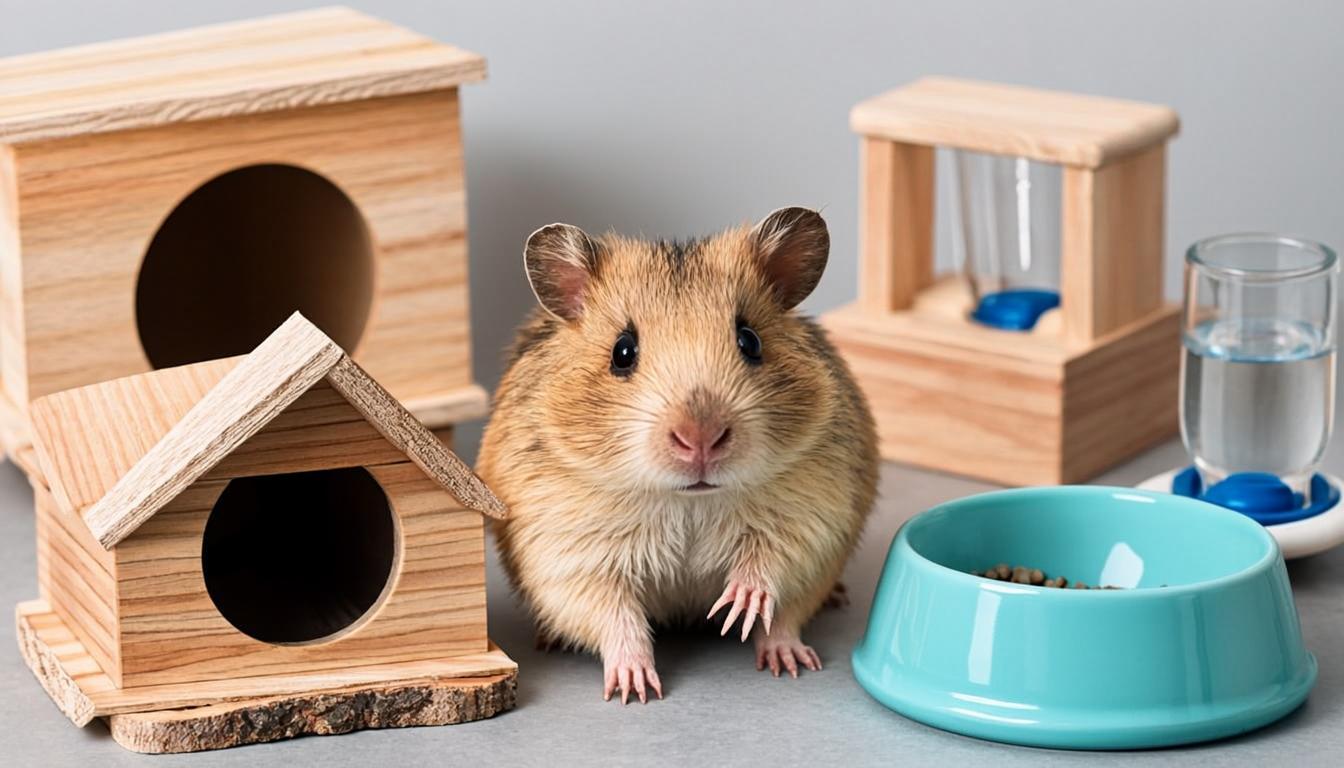
The plastic starter kit is the most durable myth in the pet aisle: a tiny colorful cage, a wheel the size of a coaster, wood shavings and a price tag that says "everything you need." A hamster kept that way survives. One kept properly — space to run, deep bedding, a real wheel — does something the tiny-cage hamster never does: you get to actually see it live.
Here's the honest version of the list, built around what hamsters demonstrably do: they run miles a night, they tunnel, they hoard, and they're nocturnal. Every purchase either serves those behaviors or wastes money.
Where the money should go
A wheel that's silent and big enough. The wheel is not an accessory; it's the hamster's main exercise apparatus, and it's used every single night. Two failure modes ruin it: noise (cheap wheels squeak loudly enough to move the cage to the garage) and size (an undersized wheel forces a back-arch that can cause lasting damage). The Niteangel Super-Silent wheel fixes both with ball bearings and a proper running width — and yes, Syrians need the larger diameter. Measure the animal, not the box.
Deep bedding and a burrow-worthy hideout. Hamsters are subterranean by design. Give them 8+ inches of paper-based bedding to tunnel in where the cage allows, and at minimum a structure worth colonizing. The Niteangel birch chamber-maze is our favorite because multi-chamber mazes mirror the burrow layouts hamsters build in the wild — sleeping room, food room, escape routes.
A water bottle AND a ceramic dish. Bottles are hygienic; dishes let hamsters drink naturally. Both together cost almost nothing and cover every preference.
Chews and foraging scatter. Untreated wood chews keep teeth healthy; scattering the daily food ration instead of bowl-feeding turns dinner into a foraging session that occupies hours.
What to skip
The colored plastic ball: hamster balls look fun and function badly — poor ventilation, no control over terrain, no ability to stop, and studies of behavior inside them read as stress, not play. A playpen with bedding and obstacles gives the same exploration safely. Also skip the tiny wire cages (bar spacing and floor area both fail minimums), cotton-wool nesting material (limb hazards), and any wheel with rungs.
The care baseline nobody should skip
Vet sources like the RSPCA's hamster care guidance agree on the fundamentals: a large, secure enclosure (the commonly recommended floor space is far bigger than any starter kit), deep bedding, constant access to fresh water, a dark quiet daytime, and daily health checks. Hamsters hide illness by instinct, so the person who sees the animal most is its first line of defense.
If you're rebuilding a starter kit, these are the two upgrades that change daily life most:
- Want a closer look? See Niteangel Super-Silent Hamster Exercise Wheel on Amazon (paid link) — it's a paid link, and the price you'll find there is the live one, not a snapshot from our research.
- Want a closer look? See Niteangel Birch Chamber-Maze Hamster Hideout on Amazon (paid link) — it's a paid link, and the price you'll find there is the live one, not a snapshot from our research.
The honest bottom line
Reallocate the starter-kit budget: a proper wheel, deep bedding, a real hideout and foraging food scatter will cost about the same as the plastic kit plus its inevitable upgrades — and the difference in the animal's behavior is not subtle. Buy for the burrower you're actually housing, not the cartoon one on the box.
This guide contains paid affiliate links. If you buy through them we may earn a commission at no extra cost to you — it never decides what makes the list.