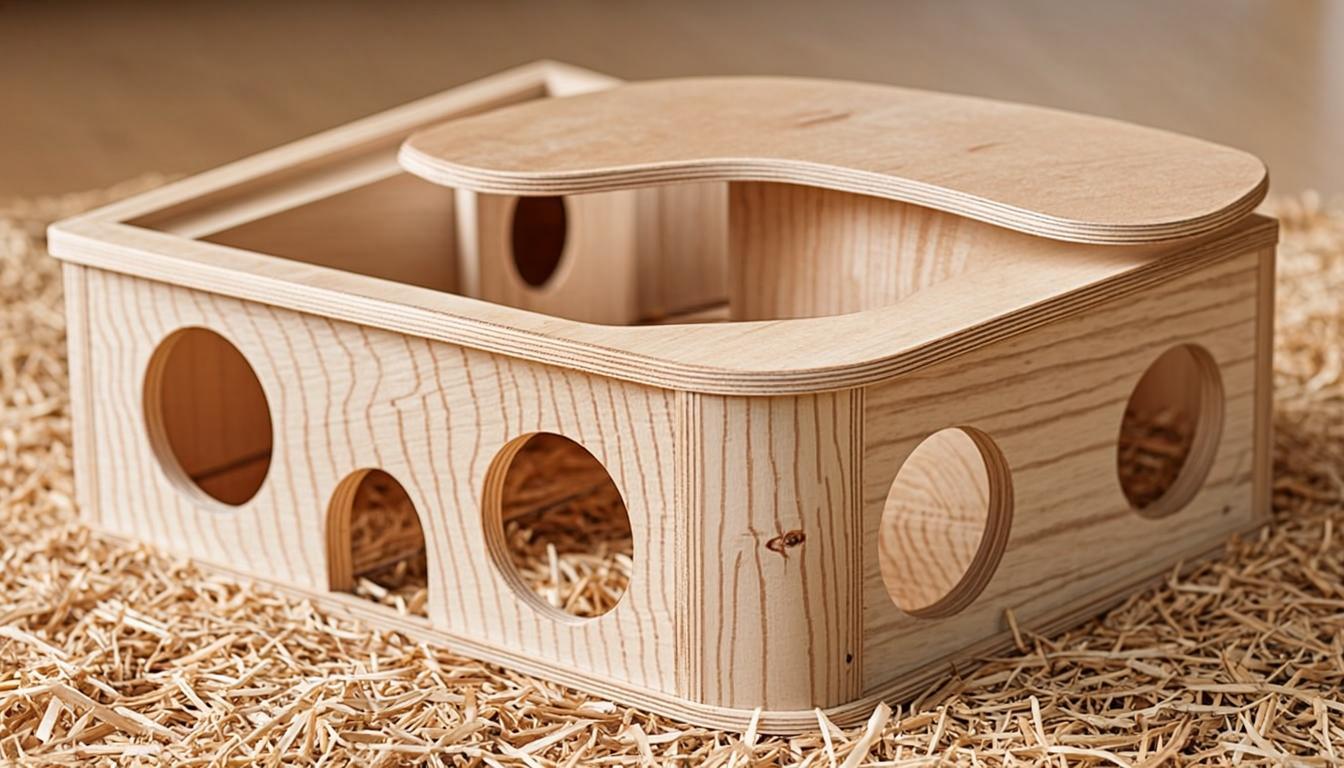
Niteangel Birch Chamber-Maze Hamster Hideout — Multi-Chamber Wooden Maze with Roof Platform — image 1
Enrichment pick

Niteangel

Niteangel Birch Chamber-Maze Hamster Hideout — Multi-Chamber Wooden Maze with Roof Platform

4.6/ 5Our editorial verdict — research-based, independently ranked

A birch-wood maze hideout with connected chambers and a rooftop platform that lets hamsters do what they actually evolved for: tunneling, hoarding and mapping their own little city.

Check price

Paid link — live price & availability on Amazon. We may earn a commission.

What we like

  • Real behavioral enrichment — hamsters patrol, hoard and redesign their routes for weeks
  • Wood absorbs scent and feels right to gnaw, unlike plastic hides that stay 'new' forever
  • Solid construction with smooth edges; no staples or glue smell
  • Looks genuinely good in a naturalistic cage setup

What we'd change

  • Wood is chewable and un-washable — spot clean only, and plan on replacement eventually
  • Takes meaningful cage footprint; measure before buying for small enclosures
  • Light enough that determined excavators can shift it — set it on a flat, stable spot

Key specifications

Type
Multi-chamber wooden maze hideout
Material
Natural birch wood, unfinished chambers
Best for
Dwarf and Syrian hamsters, gerbils, mice
Care
Spot clean; not water-washable
Lifespan
Consumable — retires with heavy chewing

Our verdict

A hideout that's actually a job

Most hamster hides are plastic domes: the hamster goes in, sleeps, done. The Chamber-Maze works differently — it's a floor plan. Multiple rooms, connecting tunnels, a roof platform reachable from inside, and enough corners for a hamster to run a hoarding operation the way its wild relatives do. Owners report the same behavior pattern over and over: patrol, stash, redesign the stash, patrol again. That's enrichment doing its job.

Build quality

The birch is unfinished and unglued in the chamber interiors — important, because a hamster will chew everything eventually and plastic glues are the thing you don't want them chewing. Edges are sanded smooth, joints are tight, and the structure is rigid enough to handle a Syrian digging through it. It reads as furniture more than a toy.

Setup notes

Give it a flat, stable spot in the cage and partly bury the base in bedding if your substrate is deep enough — hamsters treat it as terrain either way. The rooftop becomes a lookout and a feeding spot depending on the hamster's mood.

The honest drawbacks

Wood hides are consumables: weeks of chewing and the occasional deep-clean means this eventually retires, especially with heavy chewers. And it's not dishwasher-washable the way plastic is — spot cleaning with a damp cloth is the whole care routine. Both drawbacks are the honest price of a material hamsters actually want to live in.

What owners say

Summary of recurring themes in verified owner reviews, paraphrased from our research — not quotes or counts.

What owners praise: hamsters actually use every chamber — filling cheeks, moving bedding between rooms, rearranging exits — and owners describe watching the maze become the center of nightly activity. Build quality earns repeated praise.

Recurring complaints: burrowing hamsters pack chambers with bedding until the maze changes shape (which many owners come to see as a feature), and dwarf-sized hides may be snug for Syrian-sized whiskers.
About this pick

  • MULTI-CHAMBER MAZE — separate rooms connected by tunnels mimic the burrow systems hamsters build in the wild
  • ROOF PLATFORM ACCESSIBLE — chambers and rooftop connect through the tunnel network, so the maze is explorable, not just a box
  • NATURAL BIRCH WOOD — unfinished, unglued surfaces that are safe to chew and thicken with age
  • FOOD STASHING BUILT IN — chambers double as hoard rooms, which satisfies the strongest instinct a hamster has
  • FITS DWARFS AND SYRIANS — roomy chambers with multiple entrance sizes; check dimensions against your cage footprint

Keep exploring

Compare with similar picks