Cats
Why Does My Cat Knock Things Off the Table? (And What Actually Helps)
Pawstimate Research Team· Independent pet gear researchUpdated 7 min read

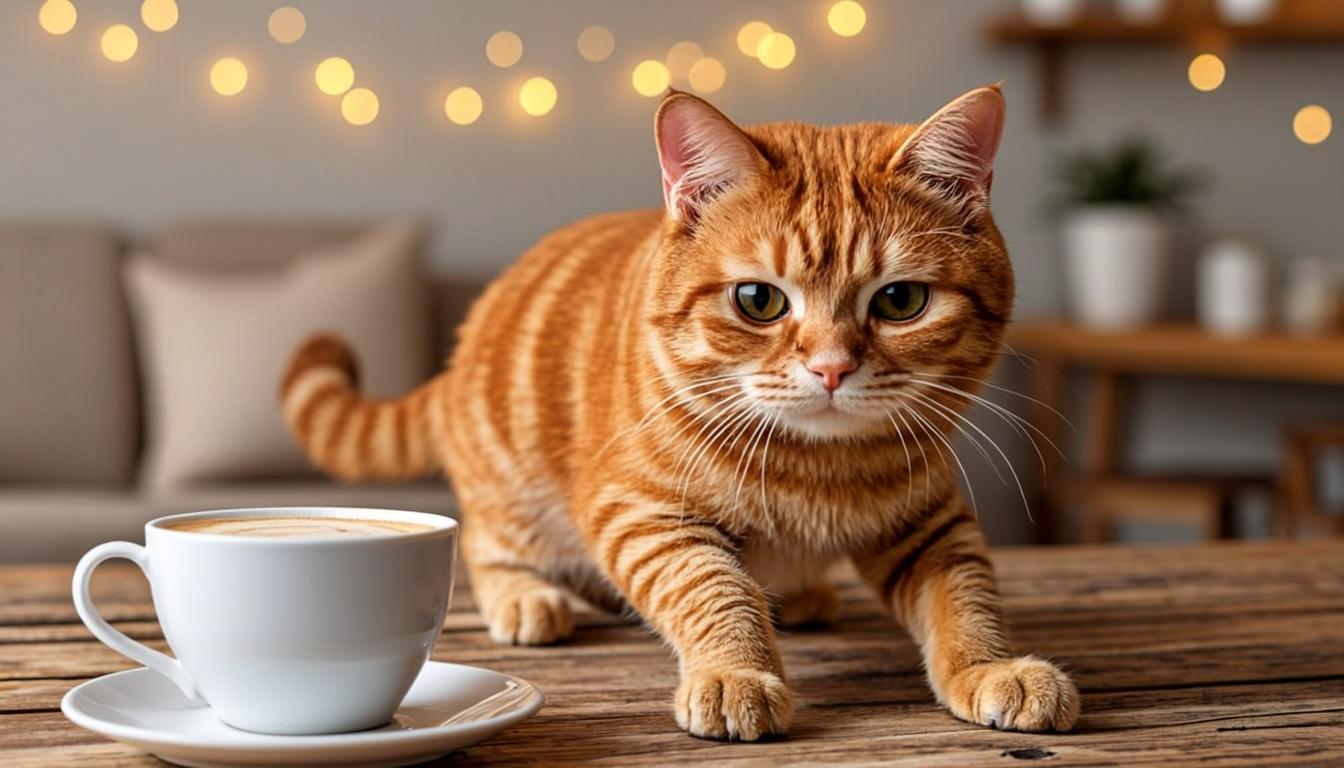
Somewhere around the third shattered mug, every cat owner starts negotiating with a small furry lawyer who knows exactly what it's doing. The push, the pause, the slow turn to maintain eye contact while your glass leaves the edge of the table — it feels personal. It isn't, quite. And understanding what it actually is turns out to be the fastest route to keeping your phone in one piece.
The behavior, decoded
Cats investigate with their paws. A paw-tap tells a cat about weight, texture and whether the thing is prey-shaped or food-shaped. That's the first layer: exploration. Your mug is simply the most interesting physics object in reach.
The second layer is attention — and yes, this one is learned. If knocking the remote produces a human appearing with snacks, the behavior has been trained. Cats are spectacular at operant conditioning, and most owners are unwitting lab assistants. The eye contact isn't spite; it's confirmation that the experiment is running.
The third layer is unmet needs. A cat with nothing to hunt, nothing to forage and no scheduled play will invent hunting games with household objects. Indoor cats in particular run a serious enrichment deficit, and your tabletop is the least boring arcade available.
What actually helped us (and the readers who wrote in)
Scheduled hunting, not free feeding. Two or three short play sessions a day that end with the cat "catching" something, followed by a small meal, mimic the hunt-catch-eat cycle and drain the energy that otherwise goes into physics experiments. A retractable feather wand is the tool we keep recommending — the movement pattern is what matters, not the price.
Food that takes work. Puzzle feeders convert a two-minute bowl into a twenty-minute project. For many cats this alone cuts the table-patrolling significantly. The PETSTA treat-dispensing puzzle is our standing pick for dogs and works just as well for food-motivated cats.
Remove the temptation honestly. Edge-of-table items get moved back, fragile things go on walls and shelves, and the table stops being an arcade. This isn't defeat; it's engineering. Cats repeat what pays out.
Make the right behavior easy. A perch or window station near the table gives your cat a better spot to supervise dinner prep. Cats want altitude and involvement — give them a legal version.
What doesn't work
Spray bottles teach a cat one thing: don't do this when you're holding the bottle. Punishment suppresses behavior in your presence and leaves it fully intact the rest of the day — worse, it erodes the trust that makes everything else harder. If you want the deeper behavioral background, the Cornell Feline Health Center's behavior library is the most reliable free resource we know for feline behavior questions.
If you want to set up the same routine, these are the two tools that did the heavy lifting:
- Want a closer look? See PETSTA Treat-Dispensing Dog Puzzle Toys (2-Pack) on Amazon (paid link) — it's a paid link, and the price you'll find there is the live one, not a snapshot from our research.
- Want a closer look? See Pet Fit For Life Retractable Cat Feather Wand on Amazon (paid link) — it's a paid link, and the price you'll find there is the live one, not a snapshot from our research.
The honest bottom line
You will not train a cat out of pawing things. You can absolutely re-route it: drain the hunting energy on purpose, feed through puzzles, and stop leaving the mug where the experiment happens. Our house went from weekly casualties to roughly zero without any punishment — just better schedules and one good wand. Your mileage will vary with the cat, but the pattern holds remarkably well.
If you buy through links on this page we may earn a commission — it never changes what we recommend or how we rank it.