dog collars
How to Choose the Right Dog Collar: Size, Type, and Safety Guide for Every Dog
· 10 min read
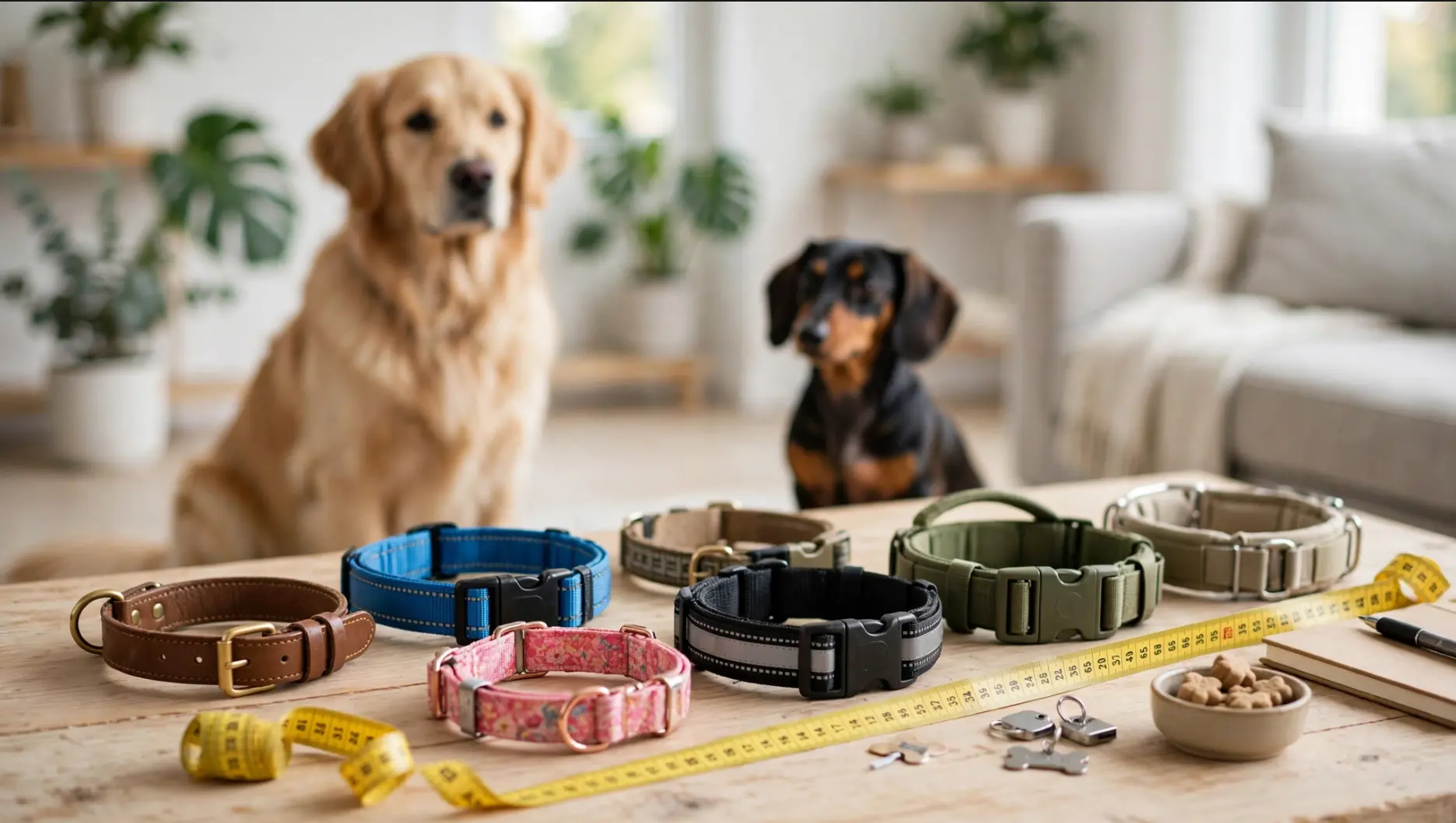
Your dog's collar is doing one of three things: holding their leash, holding their ID tag, or strangling them while they pull.
Most dog owners pick a collar based on aesthetics. Wrong move. The right collar prevents pulling, keeps your dog safe, and lasts years. The wrong one causes neck strain, escape risk, or behavioral problems.
Here's what you need to know about dog collars—and how to pick the right one.
Why Collar Type Matters
A flat collar works fine for a calm dog. It's useless for a puller. A harness-only dog has no way to display ID. A retractable leash collar doesn't give you control.
Your dog's behavior determines the right collar.
Collar Types: What They Do
1. Flat Collar (Standard)
What: Simple fabric or leather band with buckle or snap.
Best for: Calm dogs, casual walks, ID tag display.
Pros:
- Simple, affordable
- Good for tags
- Comfortable for most dogs
- Stylish options available
Cons:
- No pulling control
- Not suitable for strong pullers
- Can cause neck strain if dog pulls hard
Price: $8-50
When to use: Low-energy dogs, trained dogs that walk loose-leash.
2. Harness (Front-Clip or Back-Clip)
What: Body strap system, distributes pressure across chest.
Best for: Dogs that pull, small dogs, dogs with neck sensitivity.
Pros:
- Eliminates neck strain
- Front-clip prevents pulling (redirects dog)
- Back-clip okay for leash attachment
- Safe for small breeds
Cons:
- Requires proper fit
- Takes longer to put on/off
- More expensive ($30-80)
- Some dogs dislike them initially
Price: $20-100
When to use: Dogs that pull, dogs under 20 lbs, senior dogs with neck issues.
3. Retractable Collar (NOT RECOMMENDED)
What: Collar with built-in retractable leash mechanism.
Why we don't recommend: Dangerous. Creates constant tension. Dog learns pulling extends the leash. Not really about collar type—it's a safety issue.
Problems:
- Encourages pulling
- Can cause neck injury
- Mechanism fails frequently
- No emergency control
Price: $15-40
When to use: Only for very small, calm dogs in low-risk environments. Avoid if possible.
4. Martingale Collar (Safety Slip)
What: Two loops: one fixed, one that tightens when dog pulls—but prevents choking.
Best for: Dogs that slip out of regular collars, sighthounds, escape artists.
Pros:
- Prevents escape
- Tightens progressively (safety stop)
- Good for narrow-headed dogs
- Affordable
Cons:
- Can still be uncomfortable if over-tightened
- Not ideal for pullers (doesn't redirect)
- Requires proper fitting
Price: $15-50
When to use: Escape-prone dogs, sighthounds (greyhounds, whippets), dogs with small heads.
5. Elizabethan Collar (Cone)
What: Plastic funnel around head—medical only.
Best for: Post-surgery protection, wound prevention.
When to use: Vet's orders only. Not for walking/training.
Sizing: How to Get the Right Fit
Too loose:
- Dog can slip out
- Tags shift around
- Uncomfortable fit
Too tight:
- Neck strain
- Hair loss
- Difficulty breathing
- Your dog's distress
Correct fit:
- One finger fits between collar and neck
- Collar sits high on neck (near head)
- No sliding when tugged gently
- Dog can swallow normally
Measuring:
- Measure your dog's neck with soft measuring tape
- Add 2 inches for safety room
- That's your collar size
- Test with one-finger rule
Material Matters
Nylon:
- Affordable, durable, washable
- Best for everyday use
- Cost: $8-30
Leather:
- Comfortable, looks better, lasts longer
- Requires maintenance
- Best for training/special occasions
- Cost: $25-80
Canvas:
- Lightweight, comfortable, durable
- Less common, harder to find
- Good for sensitive necks
- Cost: $15-50
Avoid:
- Cheap plastic (breaks easily)
- Chain-only (harsh, risk of choking)
- Overly tight materials (circulation issue)
Collar + Leash Combinations
For a puller: Harness (front-clip) + standard leash For a trained dog: Flat collar + 4-6 ft leash For a small dog: Flat collar + thin leash (or harness if neck-sensitive) For an escape artist: Martingale + standard leash For walking the neighborhood: Flat collar + ID tag + standard leash
ID Tags: Non-Negotiable
Your dog's collar should carry:
- Name
- Your phone number (primary)
- Address or second number (backup)
- Microchip number (if applicable)
Lost dog + no ID = much harder recovery. ID tags cost $3-10. Investment is worth it.
Common Mistakes
Mistake 1: Leaving collar on 24/7 Remove at night (reduces wear, prevents matting, more comfortable).
Mistake 2: Buying wrong size Measure first, guess never. Returns are annoying.
Mistake 3: Using choke collar for training Causes neck damage, behavioral issues, pain. Use harness or flat collar instead.
Mistake 4: Ignoring escape risk If your dog slips collars, get a martingale or harness. Don't keep trying the same thing.
Mistake 5: Skipping ID tags If your dog gets lost and has no ID, recovery becomes much harder.
FAQ
Q: Can I use a harness as my dog's main collar? Yes, if you attach ID tags to the harness or use a tag attachment.
Q: Should I leave the collar on when my dog is home? No. Remove at night and when relaxed at home. Reduces wear and is more comfortable.
Q: What's the difference between harness and collar for safety? Harness distributes pressure across chest (safer for joints). Collar concentrates pressure on neck (more strain for pullers).
Q: How often should I replace a collar? When it shows wear, doesn't fit properly, or after 12-18 months of daily use.
Q: Are retractable collars safe? No. They encourage pulling and lack emergency control. Use standard leash + harness instead.
Bottom Line
Your dog's collar isn't fashion. It's safety equipment. Get the right type for your dog's behavior, the right size for their neck, and use ID tags always.
A $30 harness will prevent more problems than a $100 fancy collar that doesn't fit.