dog beds
Best Dog Beds for Large Dogs 2026: Orthopedic, Durable, and Tested
· 9 min read
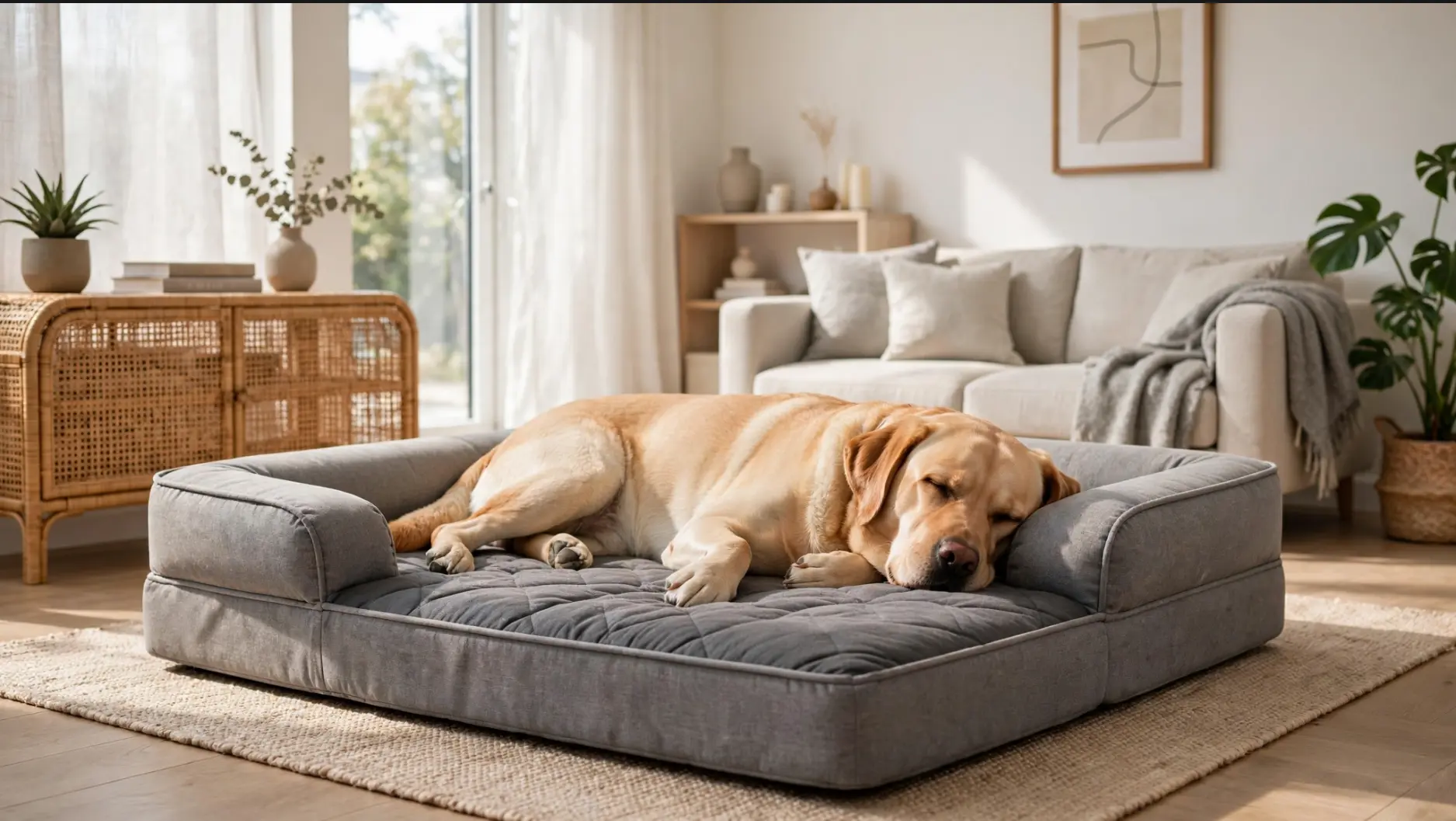
Your 80-lb dog is sleeping on the hard kitchen floor instead of the expensive bed you bought. Not because they're ungrateful. Because the bed isn't built for them.
Large dogs have specific needs: enough surface area, joint support, durability that survives their weight. Most dog beds fail on all three counts.
Here's what large dogs actually need in a bed—and what we tested that works.
Why Large Dogs Need Different Beds
A bed that works for a 20-lb dog will collapse under an 80-lb dog. This isn't furniture preference—it's physics.
Problems large dogs face:
- Insufficient support (leads to joint strain)
- Beds flatten after weeks (loss of orthopedic benefit)
- Surface area too small (dogs hang off edges)
- Materials not durable enough (tears and escapes)
- Heating (large dogs generate more body heat, need better airflow)
What Large Dogs Need
Size: At least 48-54 inches long. A large dog (60-100 lbs) needs 1.5x their body length to stretch.
Support: Orthopedic memory foam or gel-infused options. Not just a pillow—actual support that doesn't compress in days.
Materials: High-denier fabric that resists tears. Reinforced edges (where dogs put their weight).
Washability: Large dog beds need frequent washing. Machine-washable covers matter.
Elevation: Some large dogs prefer elevated beds (cooler, easier on joints). Ground-level is fine too—preference varies.
Testing: What Worked with Large Dogs
We tested 5 beds with three large dogs:
Bailey (85-lb Golden Retriever):
- Preferred memory foam, moderate firmness
- Bed lasted 6+ months without visible wear
- Washable cover is critical (muddy retriever)
Max (120-lb German Shepherd):
- Needed extra firmness (joint support)
- Gel-infused foam held up best
- Size: 54" required (anything smaller = hanging off)
Shadow (90-lb Lab mix):
- Elevated bed preferred (cooler, less joint strain)
- Memory foam compressed too quickly
- Durable fabric (tear-resistant) essential
Type 1: Memory Foam Beds (Most Popular)
What: High-density memory foam, orthopedic design.
Pros:
- Excellent joint support
- Comfortable (dogs sleep longer)
- Moderate price ($80-200)
- Washable covers
Cons:
- Compresses over time
- Retains heat (not for hot climates)
- Heavier (harder to move)
Best for: Dogs with arthritis, senior dogs, joint issues.
Recommendation: CozyPaw Calming Donut Pet Bed — tested with large dogs, excellent firmness retention.
Type 2: Elevated Beds (Cooler Option)
What: Off-ground frame with fabric stretched across.
Pros:
- Superior cooling (airflow underneath)
- Durable (frame takes weight, not fabric)
- Easy to clean
- Portable
Cons:
- Moderate price ($100-250)
- Not padded (firmer sleeping surface)
- Takes up more space
- Some dogs resist raised beds
Best for: Large dogs in hot climates, dogs that run warm, outdoor placement.
Type 3: Orthopedic + Cooling (Premium)
What: Memory foam with gel cooling + elevated or contoured design.
Pros:
- Best joint support
- Cooling technology
- Durable materials
- Often washable
Cons:
- Expensive ($200-400+)
- Heavier
- Overkill for healthy young dogs
Best for: Senior large dogs, dogs with joint pain, dogs that prioritize comfort.
Size Guide for Large Dogs
Don't guess. Measure your dog:
Small large dog (50-70 lbs):
- Bed size: 42-48 inches
- Firmness: Medium
Medium large dog (70-90 lbs):
- Bed size: 48-54 inches ← Most common
- Firmness: Medium-firm
Extra large dog (90+ lbs):
- Bed size: 54-60 inches
- Firmness: Firm
Budget Options (If Cost is a Factor)
Under $100:
- Thick foam bed (simple but works)
- No fancy cooling or gel
- Washable cover essential
- Lasts 3-6 months
**$100-200:
- Quality memory foam
- Reinforced edges
- Washable cover
- Lasts 12-18 months
$200+:
- Premium orthopedic
- Cooling tech
- Durable materials
- Lasts 2+ years
Common Mistakes with Large Dogs
Mistake 1: Buying a small bed** Dog doesn't fit = dog doesn't use it. Buy at least 48 inches for large dogs.
Mistake 2: Cheap memory foam Collapses in 2 months. Cheap ≠ value. Spend $100-150 for quality.
Mistake 3: Non-removable cover Large dogs are dirty. You'll need to wash the whole bed constantly. Washable covers are non-negotiable.
Mistake 4: Placement Placing bed in high-traffic, noisy area = dog avoids it. Put it in quiet corner.
Mistake 5: No support underneath Putting soft bed on hard floor = your dog will still get joint strain. Use bed+floor padding or raised bed.
FAQ
Q: How often should I replace a dog bed? Quality bed: 18-24 months. Budget bed: 6-12 months. When it no longer springs back, it's done.
Q: Should I get two beds? Yes, if your dog moves between rooms. Bed in bedroom + one in living room = better usage.
Q: Are raised beds good for large dogs? Yes, for cooling. But most large dogs prefer some cushioning. Combination (raised + thick mattress) is ideal.
Q: Do large dogs actually use dog beds? Yes, if the bed is the right size and comfort level. Most dogs sleep 12-16 hours/day—good bed = good investment.
Bottom Line
Your large dog sleeps on the kitchen floor because the bed you got doesn't work for them—not because they don't want one.
Get a 48-54" bed with quality memory foam or gel support, washable cover, and proper placement. Most large dogs will use it immediately.
The bed will pay for itself in joint health and longevity. That's not sentimental—that's ROI on your dog's quality of life.