Our verdict
Birdwatching from the wrong side of the glass
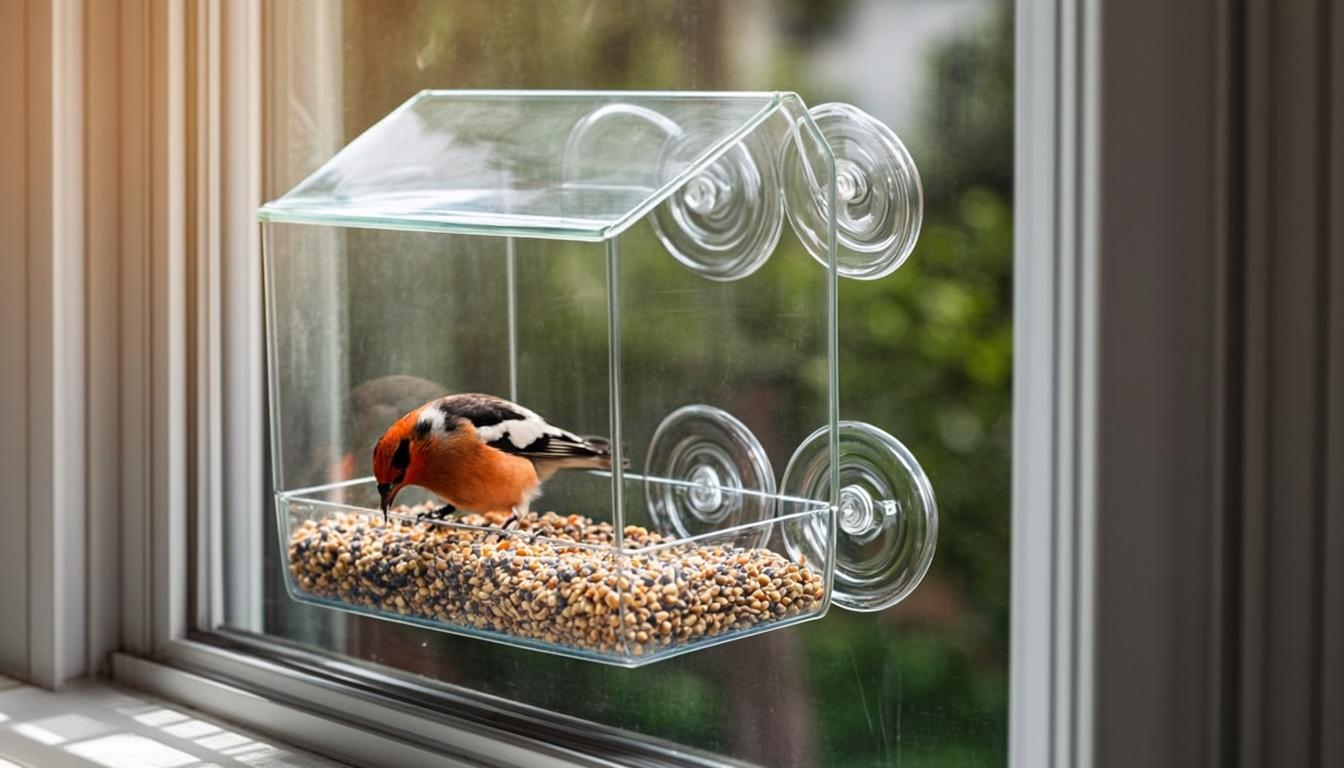
A window feeder is the rare product that pays for itself in the first week — not in savings, but in what happens during morning coffee. Chickadees, finches, sparrows and the occasional cardinal learn a reliable tray fast, and because the feeder sits on the glass itself, you're watching from inches away rather than through binoculars.
How it mounts and holds
The feeder presses to smooth glass with a set of suction cups, and the tray slides out of its housing for refills — you never need to unmount the unit. Two care rules keep it stuck: clean the glass thoroughly before mounting (any film of dust defeats suction), and press each cup firmly from the center out. On a clean pane these hold through rain and wind; on textured glass they won't, and no amount of pressing fixes that.
The cat factor
Worth saying plainly: for indoor cats, a window feeder is genuinely enriching — a slowly-changing cast of birds at safe viewing distance. If you keep cats, mount the feeder where the cat has a perch nearby and let the stalking instincts burn out harmlessly.
The honest drawbacks
Bird-window collisions are real. Position the feeder either very close to the glass (under a foot, so birds can't build speed) or add window decals nearby to break up reflections. And squirrels consider window feeders a puzzle toy — a rinse-and-reseed routine after raids is part of the deal.
What owners say
Summary of recurring themes in verified owner reviews, paraphrased from our research — not quotes or counts.
What owners praise: the clear acrylic gives a genuinely close view — children and cats both get described as glued to the window — and the removable tray makes cleaning a two-minute job. Drainage holes earn repeated mentions after rain.
Recurring complaints: suction cups need a properly cleaned window and occasional re-pressing in extreme heat, and squirrels remain a puzzle the feeder does not solve. A few owners wish the tray held more seed.
 Top pick