Our verdict
The cheapest fish-saving device in the hobby
Most fish deaths trace back to water quality problems that were invisible until they weren't: an ammonia spike, a nitrite burn, a pH crash. The API 5-in-1 strip makes those problems visible a week before they're fatal, for the price of a coffee. If you're starting any aquarium, this and a heater are the two purchases that matter more than the tank.
How testing actually goes
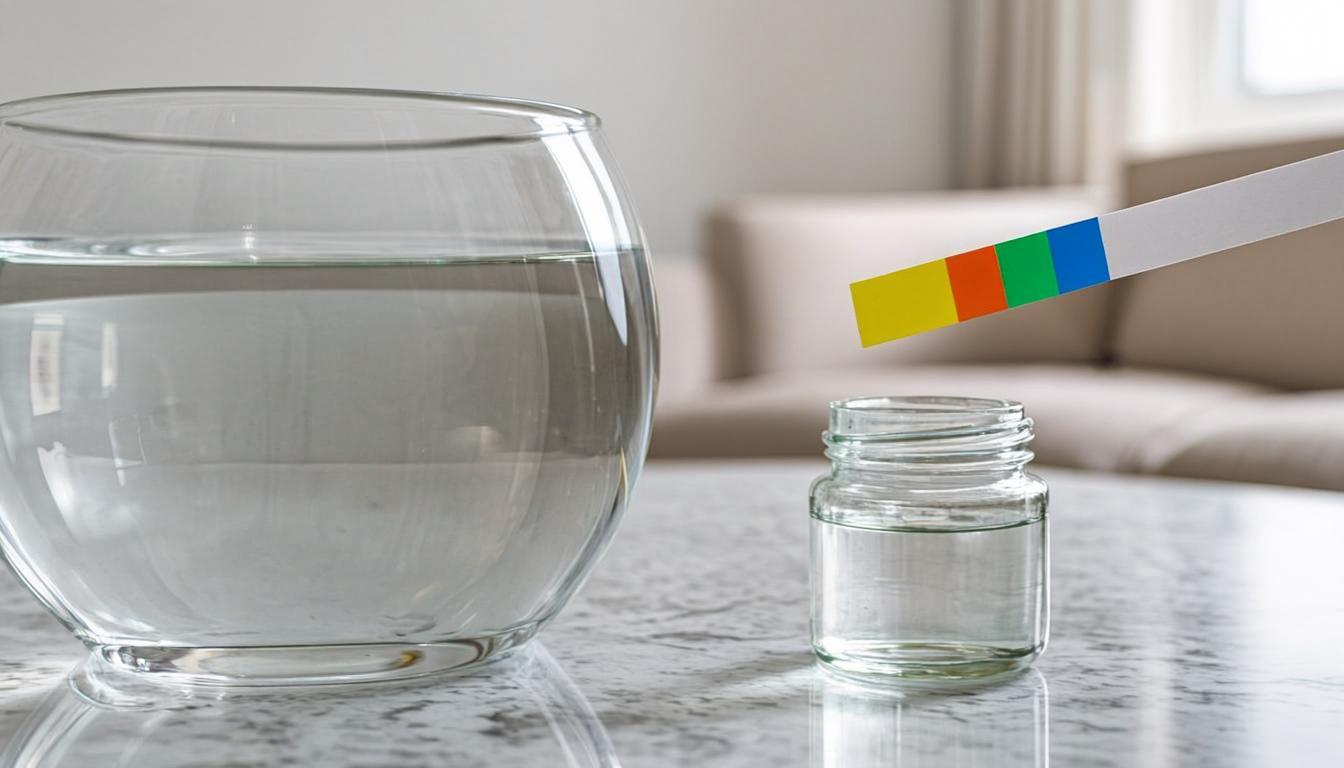
Dip a strip for a couple of seconds, shake once, wait about sixty seconds, and hold it next to the bottle's chart. You're reading five values at once. In a cycling tank the sequence is the lesson: ammonia (from waste) converts to nitrite (toxic), then to nitrate (removed by water changes and plants). Watching those numbers move is how you know the tank is safe to stock — no guesswork, no dead first fish.
The weekly rhythm
One strip a week in an established tank takes under two minutes and catches the drift that quietly kills fish: nitrates creeping past 40 ppm, KH sagging toward a pH crash, hardness sliding after a tap-water change. Numbers first, action second — that's the whole discipline.
The honest drawbacks
Strips trade precision for convenience: liquid kits (API's own Master Test Kit among them) resolve finer differences and cost less per test, which is why serious planted-tank keepers eventually graduate. Color matching by eye has variance too — read in daylight. For a first tank or a maintenance-check routine, though, strips that get used beat kits that stay in the drawer.
What owners say
Summary of recurring themes in verified owner reviews, paraphrased from our research — not quotes or counts.
What owners praise: strips give a full water picture in under a minute, which makes the weekly routine actually happen, and color charts are readable even for first-time keepers. Cycle-monitoring during new-tank setups earns repeated thanks.
Recurring complaints: strips are less precise than liquid kits at reading pH edges, so serious aquarists confirm odd results with drops — and dipping technique (timing, bottle sealing) matters more than beginners expect.
 Nano tank upgrade